
What makes a virtual shade believable
· 4 min read
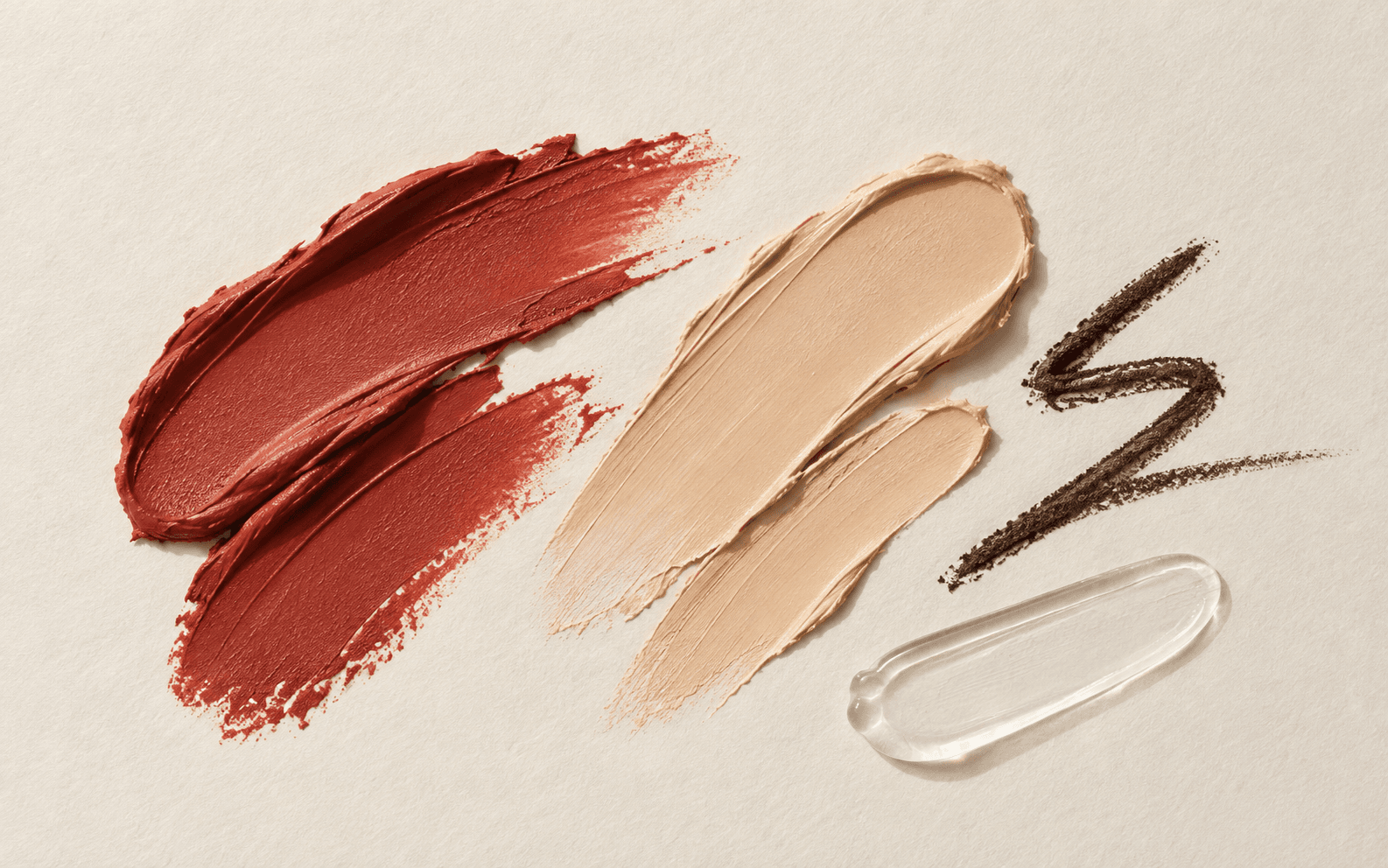
Most virtual try-ons fail the same way: the colour looks like a sticker. The face is tracked correctly, but the pigment sits on top of the skin instead of in it.
Edges
Real lipstick follows the vermilion border, softens slightly at the edge, and stops at the inner lip. We clip pigment to the precise lip outline, add a very faint blurred bloom underneath, and cut out the mouth opening so teeth stay white.
Blending modes
Matte formulas darken the skin underneath them; glosses add light. Rendering a gloss with the same blending as a matte lipstick is what makes it look painted. We multiply pigments into the skin, screen highlights on top, and layer feathered reflections that follow the lower lip.
Diffusion, not shapes
Blush and contour have no edges at all. Instead of ellipses, we paint several feathered colour fields that follow cheek volume. Eyeshadow is densest on the mobile lid and melts toward the crease. None of this requires more computing power — just more care.
Finally, every shade is reviewed on several skin tones and in different lighting before launch. That review, more than any algorithm, is what makes a try-on trustworthy.